
Acne Vulgaris
Basic Information
What is Acne Vulgaris?
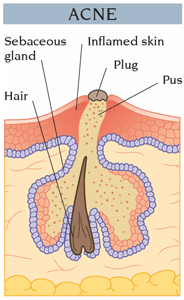
A chronic inflammatory skin condition common in adolescence, but occasionally occurring intermittently throughout life. It is characterized by skin eruptions on the face, chest and back and is more common in males than in females.
Acne Vulgaris signs and symptoms
- Blackheads (black spots the size of a pinhead).
- Whiteheads (white spots similar to blackheads).
- Pustules (small pus-filled lesions).
- Redness and inflammation around eruptions.
- If acne is severe, cysts (larger, firm swellings in the skin), and abscesses (swollen, inflamed, tender area of infection containing pus).
Acne Vulgaris Causes
Oil glands in the skin become plugged for unknown reasons, but sex-hormone changes during adolescence play a role. When oil backs up, it becomes infected by bacteria normally present in glands. Contrary to myth, acne is not caused by dirt, masturbation or foods. Cleanliness can lessen it, but sexual activity has no effect on it.
Risk increases with
- Exposure to extremely hot or cold temperatures.
- Stress.
- Oily skin.
- Endocrine disorders.
- Use of drugs, such as cortisone, male hormones, or oral contraceptives.
- Family history of acne.
- Some cosmetics.
Acne Vulgaris prevention
Cannot be prevented at present.
Expected outcomes
- Most cases respond well to treatment, and the condition tends to disappear after adolescence.
- Despite good treatment, acne will flare up from time to time.
Possible complications
- Poor self-image and psychological distress.
- Permanent facial scars or pitting of the skin.
Acne Vulgaris Treatment
General measures
- If your skin is oily, cleanse it as follows:
- Gently massage face with unscented soap for 3 to 5 minutes. Don't massage sorest places. Cleanse skin gently (rough scrubbing spreads infection).
- Rinse soap off for 1 to 2 minutes. Sometimes an antibacterial soap will help.
- After cleansing, use an astringent, such as alcohol, to remove oil.
- Use a fresh washcloth each day. Bacteria grow in damp, wet cloths.
- Shampoo hair at least twice a week. Don't let hair hang over the face even at night. Hair spreads oil and bacteria. Use dandruff shampoo to treat or prevent dandruff. Avoid cream rinses.
- After vigorous exercise, wash the sweat and oil off as soon as possible.
- Avoid the heavier oil-based cosmetics and use the thinner, lotion-style, water-based ones.
- Avoid moisturizers unless prescribed by doctor.
- Don't squeeze, scratch, pick or rub the skin. Acne heals better without damage to the skin. Removal of comedones (blackheads) may be done by the doctor.
- Don't rest your face on your hands while reading, studying or watching TV.
- Exposure to ultraviolet light may be a recommended treatment.
- Cosmetic surgery (dermabrasion) may be recommended to remove unsightly scars after acne heals.
Medications
- Antibiotics, both orally and topically, to fight infection.
- Cortisone injections into lesions.
- Isotretinoin (don't use if pregnant).
- 2.5%, 5% or 10% benzyl peroxide may be helpful.
- Retin-A causes increased sun sensitivity.
- Accutane causes increased sun sensitivity and should be discontinued at least 3 months before attempting pregnancy.




If you are pregnant, don't take oral medications for acne.
Activity
No restrictions.
Diet
Foods don't cause acne, but some foods may make it worse. Keep a record of the foods you eat. To discover any food sensitivities, eliminate foods from your diet that you suspect make your acne worse. Then reintroduce them one at a time. If acne flares up 2 or 3 days after a food is eaten, leave it out of your diet. If not, you may eat it. Acne usually improves in the summer, so some foods that cannot be eaten in the winter may be tolerated in the summer.
Notify your physician if
- You or a family member has acne.
- New, unexplained symptoms develop. Drugs used in treatment may produce side effects.