
Brain tumor
What is Brain Tumor?
A brain tumor is a growth of abnormal cells or normal cells in an inappropriate place in the brain. The growth may be malignant (cancerous) or benign (noncancerous). The brain and the spinal cord are the main components of the central nervous system (CNS). The brain is composed of a number of different types of cells and tissues. Any of these can form tumors. Some of the tumors are a combination of cell types.
According to the National Cancer Institute (NCI), brain tumors account for 85 to 90 percent of all primary CNS tumors. A primary CNS tumor develops from cancer cells within the central nervous system rather than cancer cells that have spread (metastasized) to the CNS.
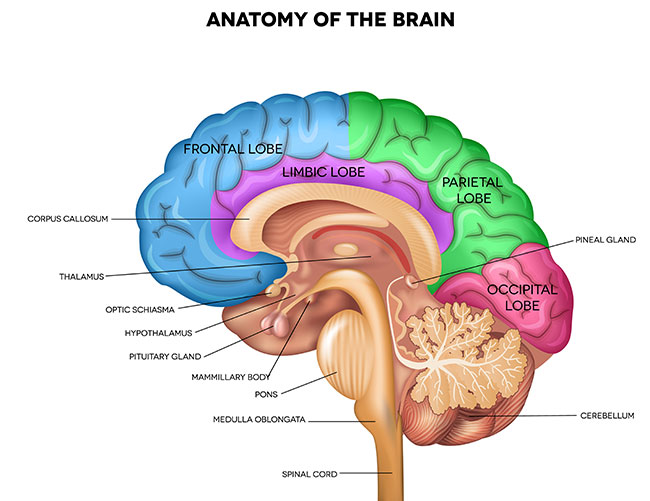
Tumors can occur in all areas of the brain. Each part of the brain controls certain functions, and tumors in these different areas disrupt the function of that area. The main areas of the brain are:
- Cerebral hemispheres. Control speech, language, thought, reasoning and emotion. The left and right hemispheres also are responsible for muscle movements and interpreting sensory information.
- Basal ganglia. Help control muscle movements.
- Cerebellum. Controls coordination of movement and balance. This part of the brain helps coordinate large motor skills such as walking as well as fine motor movements necessary for speech and use of the fingers.
- Brain stem. Contains bundles of nerves that transmit signals for control of muscles or feeling. This area also controls basic functions such as breathing and the beating of the heart.
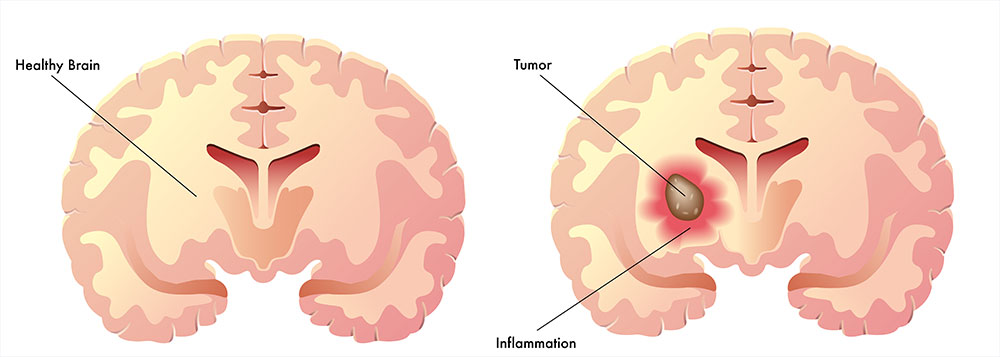
Brain tumors can either develop within the brain (primary) or develop from cancer cells that spread to the brain (metastatic or secondary). Primary tumors may be noncancerous or cancerous. Metastatic brain tumors, however, can only be malignant. According to the NCI, metastatic brain tumors are much more common than primary brain tumors. It is estimated that metastatic brain tumors outnumber primary brain tumors by 10 to 1.
Despite their harmless-sounding name, benign tumors can create problems, such as compressing the spinal cord, blood vessels or other important structures. Even though they are not cancerous, they may need to be treated with surgery or other methods.
According to the American Cancer Society (ACS), approximately 20,500 malignant tumors of the brain or spinal cord will be diagnosed in the United States in 2007. Nearly 13,000 deaths from CNS cancers are expected in 2007. These types of cancer account for approximately 1.3 percent of all the cancers and 2.2 percent of all cancer-related deaths. These statistics include adults and children with CNS tumors.
The survival time for individuals with malignant brain tumors varies with the type of cancer. For example, according the ACS, the survival time for patients with low–grade (see Types and differences) is approximately six to eight years. The average survival rate for patients with glioblastomas is approximately 12 months.
In addition, the five-year survival for all people with brain cancer varies with age. The five-year survival rate refers to the percentage of patients who live at least five years after their cancer is diagnosed. Five-year rates are used by healthcare professionals as a standard means of discussing prognosis. Many individuals live longer than the five years.
The five-year survival rate according to age for malignant brain tumors is as follows:
| Age | Five-Year Survival Rate |
|---|---|
| 15 to 44 years | 55 percent |
| 45 to 64 years | 16 percent |
| Over 65 years | 5 percent |
Many types of brain cancers can be successfully treated with one or more treatment methods. The five-year survival rates for more recently diagnosed patients may be improved because of advanced technology and more effective treatments.
Types and differences of brain tumors
There are many types of brain tumors, which can be classified in a number of ways. The classification of brain tumors involves a number of diagnostic tests that can include blood tests, imaging tests and biopsies. Initially, tumors in the brain are typically classified into two categories: primary and metastatic (secondary).
Primary brain tumors are less common and have the following characteristics:
- Develop from cells within the central nervous system (CNS)
- Can be benign (noncancerous) or malignant (cancerous)
- Are more often malignant than benign
- Rarely spread from the brain to distant areas or organs
- Damage results from the cancer spreading to nearby tissues causing pressure due to lack of space for expansion inside the skull
The National Cancer Institute (NCI) reports that in general, primary brain tumors occur more often in whites than African Americans. In addition, the mortality or death rate is higher in males than females.
Metastatic or secondary brain tumors are more common and have the following characteristics:
- Result from cancer that has started elsewhere in the body and spread cancer cells to the brain
- Secondary tumors are always cancerous and never benign
- Prognosis varies with age of patient, location of tumor in brain and response to treatment
According to the NCI, the most common primary cancers that metastasize to the brain are as follows:
| Type of Cancer (Primary site cancer) | Metastasis to Brain (% of patients with brain tumors from primary site) |
|---|---|
| Lung cancer | 50 percent |
| Breast cancer | 15 to 20 percent |
| Unknown primary cancer | 10 to 15 percent |
| Melanoma | 10 percent |
| Colon cancer | 5 percent |
The next important classification of a primary brain tumor is whether the growth is malignant or benign. These two groups are radically different because benign tumors are not cancerous, whereas malignant tumors are cancerous. Characteristics of the groups include:
Benign tumors
- Do not contain cancer cells
- Slow growing, easier to remove
- Once removed, usually do not recur
- Do not usually invade surrounding tissues
- May cause same symptoms as malignant tumors depending on size and location in the brain
Malignant tumors
- Contain cancer cells
- Usually fast growing
- Can invade surrounding tissues
- Rarely spread to other areas of the body
- Often recur after treatment
There are many types of brain tumors, although certain types occur more often than others.
Brain tumors belonging to the family called gliomas are the most common type of tumors. Glioma is not a specific cancer but a general category that includes a number of types of brain tumors. These tumors begin in the glial cells, which are found in the supportive tissue of the brain. Gliomas are categorized by their location and the type of cells that originated the tumor. Gliomas include the following tumors:
Astrocytomas
These tumors start in brain cells called astrocytes. Astrocytomas are the most common type of primary brain tumor in adults. Astrocytomas are classified as low, intermediate or high grade based on a biopsy of tissue from the tumor. The grade of the tumor determines how quickly the tumor grows and the prognosis for recovery. Low-grade tumors grow the slowest, and high-grade tumors grow the fastest.
Astrocytomas rarely spread outside of the brain or spinal cord, but they do tend to spread to surrounding tissues. Astrocytomas have a low cure rate.
Anaplastic astrocytoma and glioblastoma are the most malignant and account for 38 percent of primary brain tumors, according to the NCI. Treatment and prognosis depend on the type of tumor.
Oligodendrogliomas
These tumors begin in brain cells called oligodendrocytes, which nourish nerve cells. The pattern of spreading to tissues is similar to astrocytomas in that they rarely spread outside of the brain or spinal cord. In most cases, these tumors cannot be completely removed by surgery.
Ependymomas
These tumors develop from the ependymal cells, which are found primarily in the lining of the spaces around the brain and spinal cord. These spaces hold cerebrospinal fluid, which protects the brain and spinal cord from injury. The tumors usually do not spread into the brain tissue or outside of the brain or spinal cord. However, they may spread along the spinal fluid pathways. These types of tumors are relatively rare and occur primarily in children.
Mixed gliomas
These are brain tumors that contain more than one type of cell. The prognosis for recovery depends on the type of cells in the tumor and the grade of the most severe cell.
Brain stem gliomas
These tumors develop from the cells located in the brain stem, which is the part of the brain closest to the spinal cord. These tumors occur almost exclusively in children and are often very aggressive cancers.
Other common types of primary tumors include the following:
Meningioma
Meningiomas develop from the layers of tissue that surround the outer part of the brain and spinal cord. In the strictest sense, meningiomas are not brain tumors because they occur outside of the brain tissue, but they are classified as brain tumors. Characteristics include:
- Account for 20 to 40 percent of primary brain tumors
- Tend to occur during midlife and older ages
- Are more common in women
- Occasionally occur in families with history of Von Recklinghausen’s disease (neurofibromatosis)
- Small percentage are malignant and recur after surgery
- 85 percent are benign and can be cured, according to the American Cancer Society
Medulloblastomas
These rare tumors develop from cells in the cerebellum. The tumors grow quickly and often spread to other areas of the central nervous system. However, they can be treated and often cured by radiation therapy. Although these tumors can occur in anyone, they are most commonly found in children.
Germ cell tumors
These tumors arise from germ cells, which are normally found in the ovaries of women and testicles in men. The germ cells may travel to abnormal locations, such as the brain or spinal cord, during fetal development. Germ cell tumors can occur anywhere in the body and may be benign (noncancerous) or malignant (cancerous). The most common type of germ cell tumor found in the central nervous system is the germinoma. These types of tumors are very rare in adults and account for only a small percentage of tumors in children as well.
Schwannomas
These tumors, also known as neurilemomas, develop from Schwann cells, which are located around the nerves in the brain. They are usually benign and often affect the nerves that control hearing and balance.
Chordomas
These tumors develop in the bone at the base of the skull or at the end of the spinal cord. The tumors do not usually spread to other organs but typically return repeatedly over a 10- to 20-year period.
Pineal parenchymal tumors
Pineal tumors form in the pineal gland, a small organ in the brain that produces the hormone melatonin. This hormone helps regulate an individual’s sleep and wake cycle. There are several different types of these tumors that can vary in severity. Pineocytoma occurs most often in adults aged 25 to 35. Pineoblastomas are rare and usually occur in children.
CNS lymphoma
These tumors develop in lymphocytes (cells in the immune system) found in the CNS. In the past, brain lymphomas have been considered a very aggressive cancer resulting in death in about one year. Recent advances in treatment with chemotherapy have improved the prognosis for patients with brain lymphomas
Potential causes and risk factors
Researchers do not know what causes brain tumors. Brain cancer, as with other forms of cancer, occurs when there is an abnormality in cell growth. These abnormalities are caused by mutations or changes within a person’s genes. When the DNA within the genes is abnormal it can result in certain diseases, such as cancer.
Although there is no single cause for brain tumors, researchers believe there may be some risk factors that increase a person’s chances of developing brain cancer. However, among these factors, very few have been definitively linked to brain cancer. The majority of brain tumors occur without any known cause or related risk factor. The areas that have been researched for risk factors include environmental factors. Radiation therapy is the only established environmental risk factor for brain tumors. Brain tumors that develop from radiation are due to radiation treatment for another form of head cancer. For most patients with a cancer involving the brain or head, the benefits of receiving radiation therapy outweigh the risk of developing another tumor in the future.
Other environmental factors under investigation include certain chemicals (e.g., vinyl chloride) and electromagnetic fields (such as those generated by cell phones or high-tension wires). However, there has been no definitive evidence linking these elements to brain tumors and the most recent studies indicated no increased risk with cell phone use.
Other potential risk factors for brain tumors include:
Immune system disorders
Individuals with immune system disorders have an increased risk of developing primary central nervous system lymphomas. The immune system is responsible for protecting the body from cancer and infection. Disorders of the immune system can be present at birth or may develop in patients as the result of treatment for cancer or an organ transplant. An immune system deficiency also may be related to diseases, such as acquired immune deficiency syndrome (AIDS).
Family history and genetics
Some rare cases of brain cancers run in families. Some inherited syndromes have been associated with specific disorders including neurofibromatosis, tuberous sclerosis and Von Hippel-Lindau disease. These conditions are believed to place individuals at higher risk for developing brain or spinal tumors. Some CNS tumors are associated with patterns of altered oncogenes, mutated tumor suppressor genes and chromosomal abnormalities.
Signs and symptoms of brain tumors
The signs and symptoms of a brain tumor vary depending on its location, size and rate of growth. In general, most symptoms of a brain tumor begin gradually and become more severe with time. However, in some cases, there may be a sudden onset of specific symptoms due to the location of the tumor.
Many brain tumors produce symptoms that are related to pressure in and around the brain. There is limited space inside the skull and a tumor or extra tissue can result in an increase in intracranial pressure (ICP). The increased pressure can cause generalized symptoms including:
- Headache
- Nausea and vomiting
- Blurred vision
- Drowsiness or lethargy
In addition to the generalized symptoms, a brain tumor may cause specific symptoms directly related to the location of the tumor. It can cause irritation or damage to parts of the brain that control certain functions. Specific symptoms can include:
- Seizures
- Weakness or numbness of a body part
- Difficulty with motor movements, such as walking or speaking
- Problems with thinking and communication
- Personality changes
Diagnosis methods for brain tumors
The diagnosis of a brain tumor requires a number of tests. Other conditions can cause similar symptoms, making the diagnosis of a brain tumor complicated. Initially, a physician will obtain the patient’s complete medical history and perform a physical examination. The examination will include a detailed neurological examination to assess the patient’s brain and spinal cord functions. If a brain tumor is suspected, a number of diagnostic procedures may be indicated, including:
CAT scan (computed axial tomography)
This x-ray procedure produces detailed cross-sectional images of the body. It may be done with contrast material (dye) that can help outline structures in the body. For brain tumors, a CAT scan can show the exact location of the tumor.
MRI (magnetic resonance imaging)
An MRI uses radio waves, magnets and a computer to create a detailed image of the body. It can produce cross-sectional images from a number of different angles. MRIs are useful in detecting brain tumors because they outline soft tissues as well as bones. Sn MRI can also help detect some conditions associated with brain tumors, such as swelling or hemorrhaging (bleeding). According to the American Cancer Society (ACS), an MRI or CAT scan will detect a brain tumor, if present, 95 percent of the time.
Magnetic resonance spectroscopy
This test uses radio waves similar to an MRI, but the waves interact with atoms within the brain tumor tissues. The result is an image that highlights some features of the tumor that may not be clearly seen in an MRI. Use of this technique for diagnosis of brain tumors is still experimental.
PET scan (positron emission tomography)
In this test, a radioactive glucose (sugar) substance is injected into the patient and images are taken of the brain. The cancer cells react with the glucose substance and provide information about the chemistry of the tumor. A PET scan is usually not used for the initial diagnosis of a brain tumor but provides physicians with supplemental information about its metabolism and can help detect the spread of cancer.
Angiography
This imaging test uses a special dye injected into the patient’s bloodstream. The dye flows through the blood vessels in the brain and can be seen on an x-ray. It provides physicians with information as to how the tumor is supplied with blood. It is often used to help physicians plan their surgery.
Spinal tap (also called lumbar puncture)
A needle is placed in the lower back under local anesthesia and a small sample of cerebrospinal fluid is extracted. The fluid is examined under a microscope for the presence of cancer cells. Lumbar punctures are particularly important with people suspected of having brain lymphomas. In this type of brain cancer, the lymphoma cells often spread into the spinal fluid.
Biopsy
A biopsy is the removal of tissue from a tumor for examination by a pathologist for cancer cells. To obtain a sample for diagnosis, a neurosurgeon may surgically open the skull and remove a piece of the tumor. In some situations, the neurosurgeon may be able to remove the tissue sample through a stereotactic biopsy. In this procedure, a small hole is drilled into the skull and a thin needle is carefully guided into the tumor. With the help of a CAT or MRI scan and a computer to localize the tumor, a tissue sample is removed through the needle.
Through a biopsy sample, a pathologist can determine if the tumor is benign (non-cancerous) or malignant (cancerous) as well as the exact cell type and grade (severity). A biopsy is the definitive way to diagnose cancer.
Treatment and prevention of brain tumors
Treatment for brain tumors depends on a number of factors, including the size, location and type of tumor. In addition, the patient’s age and overall health are important factors. Treatment for brain tumors is complex and is handled by a cancer care team, typically headed by a medical oncologist.
There are a number of treatment options for brain tumors. The main treatment methods for brain tumors include surgery, radiation therapy and chemotherapy. In most cases, treatment will include a combination of these treatments, such as surgery followed by radiation therapy.
Whenever possible, surgery is the first line of treatment for brain tumors. The goal is to remove as much of the tumor as possible without causing severe damage to surrounding tissues. Even if the entire tumor cannot be removed, doctors will often take out as much as possible to reduce pressure in the brain and relieve symptoms. Prior to surgery, many patients may receive a cortisone-related steroid drug to relieve swelling and an anticonvulsant drug to relieve or prevent seizures. In some cases, a thin plastic tube, called a shunt, may be placed in the skull to drain excess fluid around the brain.
Some brain tumors, such as anaplastic astrocytomas and glioblastomas, cannot be cured by surgery. The cells from these tumors usually spread far into the normal brain tissue. However, surgical removal of the tumor reduces the amount of tissue that needs to be treated by radiation therapy or chemotherapy. Surgery can help make these treatments more effective and may prolong life even though the entire tumor cannot be removed.
The types of surgery used for brain tumors include:
Craniotomy
This most common type of surgery for brain tumors involves removal of portion of the cranium, the part of skull that surrounds the brain. This removal of a skull fragments allows the surgeon to view various sections of the brain. The skull portion is replaced after the tumor is removed. Recovery time from craniotomy depends on the extent of the surgery.
Image-guided stereotactic surgery
This surgery is similar to stereotactic biopsy and is used primarily with small tumors. Tumor cells are removed with a fine needle with the use of MRI or CAT scan for proper needle placement. This procedure is less invasive than a craniotomy and has a shorter recovery period.
Radiation therapy may be used after surgery to destroy any remaining tumor cells and can help prevent or delay recurrence of brain tumors. Most brain tumors are not cured by radiation because the therapy can damage normal cells as well. However, the therapy may be used when the cancer is inoperable.
Chemotherapy may be another option for certain patients with brain tumors. This treatment uses a series of powerful drugs that interfere with the growth process of tumor cells. By disrupting the division process, the tumor is no longer able to grow. Many of the chemotherapy drugs are given in combination to effectively treat any tumor cells present in the body. Like radiation therapy, chemotherapy is often given after surgery to destroy any remaining cancer cells. Chemotherapy has been shown to be beneficial in treating some of the more aggressive brain tumors. Chemotherapy drugs may be provided in several different ways, including directly into the tumor, into the cerebrospinal fluid and intravenously.
One of the biggest challenges in treating brain tumors with chemotherapy is the blood-brain barrier. This network of blood vessels and cells naturally protects the brain from foreign, harmful chemical agents. The same barrier that protects the brain also prevents the chemotherapy drugs from effectively reaching the brain to target the tumor. For this reason, interstitial chemotherapy (implanted chemotherapy) or intrathecal chemotherapy (injected into the spinal fluid) may be more effective than systemic chemotherapy in destroying the cancer cells. Researchers are continuing to test medications that may be able to break through the blood barrier.
The same medications that are given prior to surgery may be given following surgery. Medications to reduce swelling in the brain and prevent seizures may be given for treatment. Often these drugs help relieve symptoms, such as headaches, in brain tumor patients.
Although chemotherapy may be more successful in treating children with brain tumors, it can decrease the chance of a brain tumor spreading to other tissues in the brain or outside of the central nervous system. It is most effective when used in combination with surgery and/or radiation.
After a brain tumor has been diagnosed and treated, the patient will be followed closely by the cancer care team. Patients may need treatment from various healthcare professionals for problems that result from surgery. Physical therapy may be needed for movement problems, and speech therapy may be needed for communication difficulties. Often brain tumor patients and their families seek psychological and emotional support. The cancer care team is in place to help brain tumor patients and their caregivers handle all aspects of treatment.
In general, people with brain tumors have an increased risk of developing additional medical problems. Patients must follow the physician recommendations for follow-up appointments and testing. The close monitoring is to ensure that any recurrence of cancer or long-term effects of treatment is identified promptly and treated appropriately.
There is no known way to prevent brain tumors. Early diagnosis and treatment of other cancers in the body may reduce the risk of metastatic brain tumors. Also, if individuals have any of the inherited conditions that increase the risk of brain tumors, they should be carefully monitored by professionals for signs of brain cancer.
Grading of brain tumors
Most cancers in people are staged to determine the extent and prognosis and to select the treatment options. Staging is a standard means for healthcare professionals to summarize information about the cancer. Brain tumors differ from tumors in other parts of the body. With other tumors, one of the most deadly aspects of the cancer is the extent to which it has spread in the body. Primary brain tumors rarely spread to other organs. For this reason, brain tumors are not staged. Instead, tumor grading is used to facilitate communication, plan treatment and predict the outcome for recovery.
The World Health Organization (WHO) has established a grading system for tumors that is based microscopic examination of tissue using the following criteria:
- Differences from normal cells (atypia)
- Rate of growth (mitotic index)
- Indications of uncontrolled growth
- Dead tumor cells in the center (necrosis)
- Potential for invasion or spreading (infiltration)
- Margin of the tumor (diffuse or focal)
- Blood supply (vascularity)
This WHO grading system may be used for adult brain tumors:
Grade I
- Slow-growing cells
- Almost normal appearance under a microscope
- Least malignant
- Rarely spreads into nearby tissue
- May be possible to remove entire tumor by surgery
- Usually associated with long-term survival
Grade II
- Relatively slow-growing cells
- Slightly abnormal appearance under a microscope
- Can invade nearby tissue
- Can become a higher-grade tumor
Grade III
- Actively growing abnormal cells
- Abnormal appearance under a microscope
- Grows very quickly
- Likely to spread to nearby tissue
- Tends to recur as a higher-grade tumor
Grade IV
- Abnormal cells that reproduce rapidly
- Very abnormal appearance under the microscope
- Forms blood vessels that maintain rapid growth
- Areas of dead cells in center
- Difficult to treat successfully
Tumors often contain several grades of cells. The highest or most malignant grade of cell determines the grade of the tumor, even if most of the tumor is lower grade. Some tumors may change, such as a benign tumor may become malignant. In some cases, a lower-grade tumor may recur as a higher grade.
The choice of treatment and chance of recovery are dependent on the type, location, and grade of the tumor. Whether cancer cells remain in the brain and whether they have spread to other parts of the brain will also affect a patient’s prognosis.
Questions for your doctor about brain tumors
Preparing questions in advance can help patients have more meaningful discussions with their physicians regarding their conditions. Patients may wish to ask their doctor the following questions about brain tumors:
- How do I know if my symptoms are related to a brain tumor or a less serious condition?
- What tests will be used to diagnose my brain tumor?
- How will you know if I have a primary or secondary brain tumor?
- If it is secondary, how can you determine where my cancer started?
- Will I need a brain biopsy? If so, how will it be completed?
- What is the grade of my tumor?
- Will I need surgery to remove the tumor? If so, which type?
- What medical conditions might result from the surgery?
- What other treatments might be necessary?
- What are the risks and benefits of these treatments?
- What can I expect in terms of recovery?
- How will I know if my cancer has spread to other areas?
- What are the chances my cancer will return?
- What is my prognosis based on my type and grade of cancer?
- Can you recommend a support group for brain cancer patients and their families?
Additional Information
Medications
- Cortisone drugs to diminish swelling of the brain tissue.
- Anticonvulsant drugs to control seizures.
- Pain relievers.
- Anticancer drugs.
Activity
Stay as active as your strength allows. Work and exercise moderately. Rest when you tire.
Diet
Eat a normal, well-balanced diet. Vitamin and mineral supplements may be necessary if you cannot eat normally.
Notify your physician if
- You or a family member has symptoms of a brain tumor.
- New, unexplained symptoms develop. Drugs used in treatment may produce side effects.
- American Cancer Society. cancer.org
- National Cancer Institute. cancer.gov